
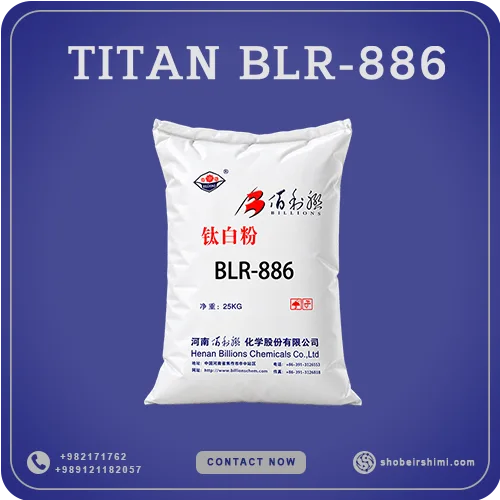
- Grade: BILLIONS BLR-886.
- Pigment type: Rutile TiO₂.
- Manufacturing route: Chloride process.
- Surface treatment: Alumina with organic modification.
- Performance focus: Dispersion, white appearance and limited influence on melt flow.
- Supplier: Shobeir Shimi International Trade Co. LTD.
BLR-886 titanium dioxide
Description
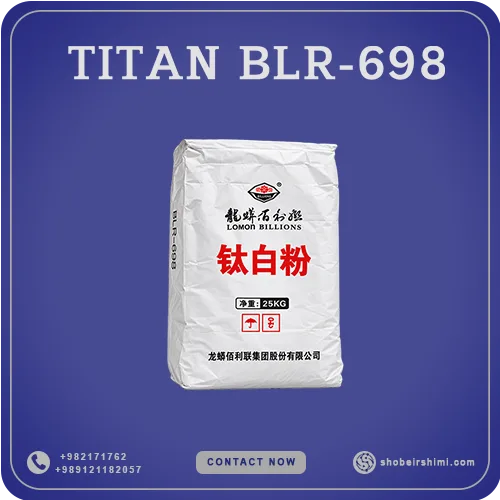
BILLIONS™ BLR-886 titanium dioxide is a chloride-process rutile pigment from LB Group. Designed for plastics, it combines white colour development with dispersibility and processing performance. Manufacturer-recommended uses include polyolefin masterbatch, high-temperature extrusion coating, cast film, engineering plastics and footwear.
Shobeir Shimi supplies industrial raw materials as an international trading company. Contact our team to discuss BLR-886 sourcing, review technical documentation and request a quotation for your required quantity and destination.
Why Consider BLR-886 for Polymer Processing?
For a plastics manufacturer, pigment selection involves both appearance and production behaviour. A candidate grade needs to achieve the required colour and opacity while fitting the formulation, equipment and output requirements.
BLR-886’s documented application profile makes it relevant to buyers evaluating a pigment for polymer processing. The practical purchasing question is how it performs in the intended resin and finished article.
For a meaningful comparison, define the acceptance criteria before testing. Include colour, opacity, dispersion quality and processing behaviour. Where relevant, also assess filtration, visible defects and the mechanical properties of the finished product. These checks turn a general grade recommendation into evidence for a specific purchasing decision.
Applications and Selection Considerations
The following points are practical evaluation guidance for the applications identified by the manufacturer.
Polyolefin White Masterbatch
Evaluate the pigment at two stages: in the masterbatch concentrate and after dilution into the final polymer.
Keep the carrier resin, dispersant package and processing conditions consistent during initial comparisons. Then assess the diluted product at the intended let-down ratio and thickness. Compare white shade, opacity and visible agglomerates against an approved reference.
When reporting a trial, distinguish the pigment concentration in the masterbatch from the masterbatch addition rate in the finished product. Those two figures describe different parts of the formulation and should not be used interchangeably.
Cast Film
For cast-film evaluation, produce samples at the intended film thickness and pigment concentration. Inspect the film for colour uniformity, coverage, visible particles and surface defects.
If filtration performance is a purchasing requirement, include a suitable filter-pressure test with an agreed procedure. General dispersion claims do not establish a numerical filter-pressure value.
Record line conditions during the trial so that differences between samples can be interpreted. A visual comparison is less useful when film gauge or processing conditions change at the same time.
Extrusion Coating
Assess extrusion-coating performance using the intended resin, substrate and operating conditions. Review coating appearance, coverage and consistency at the target coating weight.
The application description does not establish a universal maximum processing temperature. Temperature settings and residence time should be selected for the actual polymer system and confirmed through appropriate trials.
Engineering Plastics and Footwear
For engineering plastics, identify the specific resin and its processing requirements before approving the pigment. Check colour and dispersion after representative processing, together with any required finished-part properties.
For footwear compounds, evaluate the complete material system. Colour consistency and surface appearance should be considered alongside the flexibility, hardness or other properties specified for the finished component.
BLR-886 Titanium Dioxide Technical Specifications
| Property | Value | Test Method / Reported Basis |
|---|---|---|
| TiO₂ content | 97% — typical | XRF |
| Inorganic coating | Alumina | — |
| Organic treatment | Present | — |
| Moisture when packed | ≤ 0.4% | ISO 787-2 |
| Tamped bulk density | 1.2 g/cm³ — typical | ISO 787-11 |
| Oil absorption | 12 g/100 g — typical | ISO 787-5 |
| Density | 4.1 g/cm³ — typical | ISO 787-9 |
| ISO 591 classification | R2 | — |
Typical properties describe the grade and are not a substitute for an agreed purchase specification. Request the applicable TDS and review the COA for the batch being offered.
Processing and Quality Evaluation
Use a controlled trial when introducing BLR-886 into an established formulation. Record pigment loading, resin grade, additive package, equipment settings and sampling conditions.
Compare the material against the current pigment using the same procedures. For masterbatch, carry the evaluation through to the final article instead of approving the material solely from pellet appearance.
A practical approval record can include:
- Colour difference against the agreed reference.
- Opacity at a defined thickness.
- Dispersion or agglomerate assessment.
- Melt-flow behaviour under stated test conditions.
- Filtration results, where required.
- Finished-product appearance and relevant properties.
Set acceptance limits according to the application. Do not infer a guaranteed processing benefit or pigment dosage from an individual datasheet value.
Packaging, Storage and Documents
Manufacturer packaging options include 25 kg bags and flexible bulk containers. Confirm the available format for the proposed order.
Store indoors, protected from moisture and temperature extremes, and rotate stock on a first-in, first-out basis.
Request the appropriate documents during procurement:
- TDS: Product identity and technical characteristics.
- COA: Reported results for an identified batch.
- SDS: Handling, storage and safety information.
Check that the grade and batch details correspond to the offered material. Any mandatory document or acceptance requirement should be agreed before purchase.
BLR-886 Titanium Dioxide Price and Supply
A BLR-886 titanium dioxide price quotation should identify the quantity, packaging, delivery destination and delivery terms. Include the required specification and documentation so that the offer reflects the full purchasing requirement.
When comparing alternatives, evaluate the cost of achieving an approved finished product. Consider pigment consumption, processing performance and rejection levels alongside the quoted unit price.
Shobeir Shimi can review your sourcing inquiry and provide the relevant commercial details. Availability, minimum order quantity, payment terms and dispatch timing are confirmed for each quotation.
Frequently Asked Questions
How should I evaluate BLR-886 for white masterbatch?
Test it in the intended carrier and additive package, then evaluate the diluted product at the planned let-down ratio. Compare colour, opacity, dispersion and processing behaviour with your approved reference.
Does good dispersion guarantee suitability for thin film?
No. Thin-film approval should include trials at the intended gauge and production conditions. Define acceptable defect levels and filtration requirements for the application.
Is the typical TiO₂ value a guaranteed minimum?
No. A typical value should not be presented as a minimum specification. Use the agreed product specification and relevant batch documentation for purchasing acceptance.
Can BLR-886 replace another plastics-grade pigment?
It can be assessed as a candidate. Approve substitution only after comparing the required optical, processing and finished-product properties.
What MOQ and lead time apply?
These depend on the proposed supply arrangement and order requirements. Send your quantity, destination and packaging preference to obtain a quotation with confirmed terms.
Can I request technical documents before ordering?
Yes. Include your TDS, SDS and batch COA requirements in the inquiry so document availability can be checked for the offered material.
Request a Quote for BILLIONS BLR-886
Send Shobeir Shimi your required quantity, polymer type, application, packaging preference and delivery destination. Include any mandatory technical criteria to help us review your material requirements.
Reviews
There are no reviews yet.