
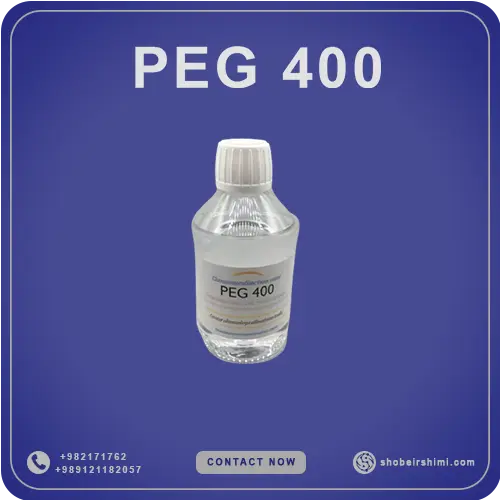
- Grade: PEG 400 (Polyethylene Glycol 400)
- Group: Polyethylene Glycols (PEGs) / Water-soluble linear polymers
- Application: Pharmaceuticals (ointment bases, tablet coatings, gelatine capsules, liquid oral medications), cosmetics and personal care, household products (soaps, detergents), ceramics, adhesives, textiles, and agricultural insecticides
- Attribute: Liquid form, colorless, water-soluble, hygroscopic, low volatility, thermally stable (below 300°C), acts as a Newtonian fluid, approximate average molecular weight of 400
- Producer: Shazand Petrochemical Company
- Packaging: 220-liter drums (200 kg net weight), arranged with 4 drums per pallet
PEG 400
Description
Price and Purchase of PEG 400: Grades, Uses, and Technical Properties
When you are doing some work with a pharmaceutical formulation or a cosmetic product, you may have seen PEG 400 Pharma Grade. It’s one of those raw materials that is used in every cosmetic product, such as oral liquid formulations, softgels, creams, shampoos, and even some food applications. So what is special about PE 400? Why is the buyer asking for PEG 400 pharmaceutical grade instead of any liquid polyethylene glycol? For this material, if you want to purchase it, stay with us at Shobeir Shimi as PEG 400 cosmetic ingredient supplier.
What Is PEG 400 Exactly?
Polyethylene Glycol 400 is one member of a family of polymers (polyethylene oxides) produced from ethylene oxide. The number “400” indicates its average molecular weight, which is between 380 and 420 daltons.
PEG 400 liquid is clear, colorless, and flows freely at room temperature. This PEG remains fluid at room temperature, whereas the higher molecular weight PEGs become waxy solids. This means it is simple to pump, measure and mix into all sorts of items.
PEG 400 is an interesting chemical. It is completely soluble in water, but will also get along with many organic solvents. The amphiphilic behavior is what makes it so effective for drug and active ingredient delivery to cells that are hydrophobic.
Technical Properties at a Glance
Here is a quick summary of the key characteristics you can expect from PEG 400 material, especially PEG 400 export grade.
| Property | Typical Value / Description |
|---|---|
| Appearance | Clear, colorless viscous liquid |
| Molecular weight (average) | 380 – 420 daltons |
| Water solubility | Completely miscible in all proportions |
| Viscosity at 20°C | Approx. 90 – 110 mPa·s |
| pH (5% solution in water) | 5.0 – 7.0 |
| Hydroxyl value | 280 – 300 mg KOH/g |
| Residual ethylene oxide | < 1 ppm (pharma grade) |
| Heavy metals | < 5 ppm (USP requirement) |
| Storage condition | Cool, dry, sealed container |
These numbers matter when you are designing a formulation. For example, the viscosity affects how easily you can pump the material into softgel capsules. The purity levels determine whether the material is safe for oral use.
Pharmaceutical Applications: Where PEG 400 Is Used
The pharmaceutical industry does not take risks with PEG 400 pharmaceutical raw material. In cases where the product goes into the human body, either ingested orally or absorbed through the skin, all the ingredients have to be justified. Pharmaceutical formulations PEG 400 have been given the right to be here.
Oral Liquids
Numerous medicines are not soluble in water. This is an issue with liquid medicines. Polyethylene Glycol 400 is a solution because it is a co-solvent. You add some water to it, perhaps some glycerin or propylene glycol, and the drug remains suspended in solution. The patient receives a clear, even, not shaken liquid, rather than a suspension. This is a common means of delivery of pediatric syrups and geriatric drops for oral administration.
Soft Gelatin Capsules
Softgels are a common dosage form, particularly used for drugs that are poorly soluble or are contained in oil. But not all softgels contain oil. Some take PEG 400 as the liquid within the capsule shell. This is useful for water soluble or hydrophilic active ingredients. There are several benefits for it compared to oil, such as quicker absorption. Another is stability; PEG 400 doesn’t go rancid.
Creams and Ointments
In some cases, creams and ointments require a base that feels nice and can be easily washed off. Petrolatum or lanolin-based traditional ointments may be oily and greasy to the touch. The PEG based ointments are made up of a blend of PEG 400 with higher molecular weight PEGs, such as PEG 3350 or PEG 4000, which have a different feel. They don’t weigh down the skin, and they wash away. They prefer them for that reason, making them a preferred choice in hospitals and clinics.
Cosmetic and Personal Care Uses
Cosmetic chemists search for ingredients that enhance the texture, keep the skin moisturized, and don’t irritate it. PEG 400 Cosmetic Grade does.
Polyethylene Glycol 400 is used in various cosmetic formulations, such as lotions, serums, and creams. It absorbs moisture from the air and brings it into the skin. It enhances the spreading of the product. Just a little will make the thick cream less heavy and more high quality.
Shampoos and body washes are also enhanced. A lot of fragrance oils and botanical extracts will not dissolve in water. If they were not solubilized, they would separate and float to the surface. PEG 400 makes everything even. This produces a clear and stable product that will present well on the shelf.
Food Grade and Industrial Uses
There is a PEG 400 food grade. It is used in the food industry as a defoaming agent or a carrier for flavors and colors. The purity requirements are even more stringent than cosmetic grade, as it is used in products people consume.
Industrially, PEG 400 is used in adhesives, metalworking fluids, printing inks and ceramics. The properties of solubility, low toxicity, and stability that apply to the pharmaceutical industry are also applicable to heavy industry. What you’ll find is that while industrial users may not require USP grade purity. So it’s important to get the right grade.
What’s the Difference Between PEG 400 and PEG 600?
One often asked question: What’s the difference between PEG 400 and PEG 600?
The number is the average molecular weight. PEG 400 has a molecular weight of approximately 400. The molecular weight of PEG 600 is approximately 600. The difference in the numbers seems slight, but it will make a huge difference in the physical behavior.
- PEG 400 liquid is easily flowable. Less viscous and more absorptive of moisture.
- PEG 600 is thicker and is more like a thin syrup. Is less hygroscopic.
What Is the Best One to Use?
Select PEG 400 for rapid mixing, pumping and rapid drug release. PEG 600 can be used to give a more substantial vehicle or slower release. Choosing will depend on the formulation you use.
Safety Profile and Regulatory Status
Is PEG 400 safe for pharmaceutical applications? Yes, if you purchase the correct grade. Authentic PEG 400 USP grade is subject to low limits for ethylene glycol, diethylene glycol, and heavy metal contaminants. It is listed as Generally Recognized as Safe (GRAS) by the FDA for certain uses. It’s also listed in the FDA Inactive Ingredient Database for oral capsules, oral solutions, topical creams and ophthalmic preparations.
One drawback is that PEG 400 might have a laxative effect at high doses. So, some bowel preparation products include it as an active ingredient. At normal formulation levels, this is not a concern.
Buying PEG 400 from Shobeir Shimi
Choosing the right PEG 400 supplier matters because not all grades are safe for cosmetic or oral use. Shobeir Shimi provides reliable pharmaceutical, cosmetic, and food‑grade PEG 400 with full documentation and bulk packaging options, including drums, IBC totes, and tankers. Store the product sealed, dry, and away from heat. For pricing or orders, contact our export team.
FAQs
- What is PEG 400 used for?
It is a solvent, vehicle, humectant, and base material in pharmaceuticals (oral liquids, softgels, creams), cosmetics (lotions, shampoos), and food processing. - Is PEG 400 safe for pharmaceutical applications?
USP grade material meets safety standards for oral, topical, and some parenteral uses. - What is the difference between PEG 400 and PEG 600?
PEG 400 has lower molecular weight, lower viscosity, and higher hygroscopicity. PEG 600 is thicker and releases drugs more slowly in some formulations. - Can PEG 400 be used in cosmetic formulations?
It works as a humectant, solubilizer, and texture enhancer in many personal care products. - Is PEG 400 water soluble?
It mixes with water in any proportion. - How can I buy PEG 400 in bulk?
Just contact us at Shobeir Shimi. We offer pharmaceutical, cosmetic, food, and industrial grades.
PURCHASE
After selecting the desired grade, please share the product specifications, quantity, and delivery destination via WhatsApp.
Our sales team at Shobeir Shimi will carefully review your request and provide:
- The latest price and availability
- Packaging and shipping options for export
- Professional guidance to support you through the purchasing process
We are committed to ensuring a smooth and reliable supply experience for our global clients.
Reviews
There are no reviews yet.