

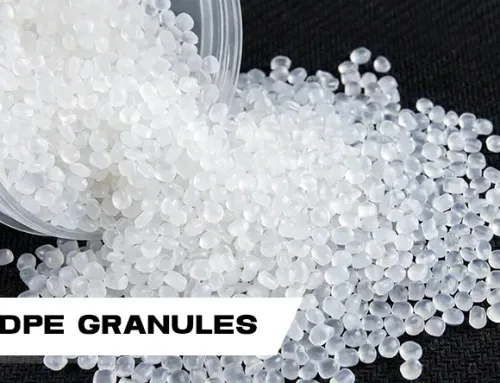
The LLDPE granules are high performance polyethylene resin designed with high strength, good puncture resistance and downgauging in comparison with the conventional LDPE. These LLDPE polymer granules are beneficial in enabling film manufacturers, rotomolders, and compounders reduce material usage but preserve the security of the load and long-lasting vigor in challenging applications. Contact us at Shobeir Shimi now to get a free quote.

What are LLDPE Granules?
Linear low density polyethylene resin (LLDPE) is polyethylene that is copolymerized with alpha olefins, butene (C4), hexene (C6), or octene (C8). In contrast to LDPE, which has become long, disordered branching, the structure offers LLDPE plastic granules greater tensile strength, greater elongation at break and far greater puncture resistance at the identical thickness.
Downgauging is possible with the use of LLDPE polymer granules: film manufacturers can typically downgauge their films by approximately 20 to 30 percent and maintain the same load holding capabilities as well as impact performance as thicker LDPE based films. It implies fewer units of resin used per pallet/bag, less prices of the raw material per unit and fewer environmental taxes or Extended Producer Responsibility (EPR) per tonne packed.
LLDPE granule, as a blend partner, may be blended with LDPE to enhance toughness, puncture resistance and seal strength and LDPE enhances bubbles stability and processing on high speed blown film lines. To the purchaser seeking to know what is LLDPE granules in real life use, it is the heavy duty all purpose workhorse resin in the backbone of the modern stretch film, heavy duty liners, a lot of high performance packaging structures. Explore our C4/C6/C8 linear low density polyethylene resin grades or get a competitive quote today.
Types of LLDPE Granules
There are LLDPE granules in both virgin and recycled / reprocessed forms so that technical and commercial teams can match performance, sustainability, and cost targets. Each LLDPE granules grade is optimized for a specific process (film, rotomolding, injection, masterbatch) and comonomer chemistry (C4/C6/C8).
1. Virgin LLDPE Granules (C4, C6, C8 Grades)
LLDPE granules virgin is produced for converters requiring consistent quality in high‑speed film, molding, and compounding lines. Available in multiple grades, they provide different draw‑down, cling, optical, and sealing characteristics.
-
Butene (C4):
Standard and cost‑effective, C4 LLDPE suits general liners, shopping bags, garment packaging, and everyday blown film where extreme puncture resistance is unnecessary. It offers good toughness and seal strength at lower cost.
-
Hexene (C6) & Octene (C8):
C6 and C8 LLDPE deliver higher tensile strength, superior tear and puncture resistance, and improved clarity. They are used in multilayer stretch films, pallet wraps, and heavy‑duty sacks. C8 is valued for premium stretch films due to excellent elongation, hot‑tack, and puncture performance even at thin gauges.
-
Additive & UV Options:
Available with Slip (Erucamide) and Antiblock (Silica or Talc) packages for smooth film handling and reduced friction. UV‑stabilized grades are designed for outdoor or agricultural films requiring durability under sunlight exposure.
2. Recycled & Reprocessed LLDPE Granules
LLDPE recycled granules serve cost‑sensitive users needing reliable toughness rather than optical clarity. They are ideal for trash bags, construction films, and pipe or conduit manufacturing.
-
Feedstock & Processing:
LLDPE reprocessed granules are mainly from clean post‑industrial stretch wrap and washed agricultural films, these materials ensure consistent melt flow and mechanical strength. The recycling line includes shredding, washing, drying, and double‑degassed extrusion with fine mesh (100–120) filtration to remove impurities and minimize gel defects.
-
Applications & Cost Benefit:
Commonly used in garbage bags, damp‑proof membranes, and recycled piping components, these granules typically offer 30–40% cost savings compared with virgin resin while maintaining solid mechanical performance for non‑critical uses.
Grades and Applications of LLDPE granules
Different LLDPE granules grade options are optimized for specific processes such as cast/blown film, rotomolding, injection molding, and masterbatch production. As an LLDPE granules supplier, the portfolio is structured so that technical buyers can quickly match stretch film raw material or molding resin to their equipment and product design.
Film Grade (Cast & Blown)
LLDPE film granulator are the backbone of global stretch film and many packaging films. Film grades are tuned for bubble stability (blown film) or high line‑speed stability (cast film) with excellent strength, cling, and sealing behavior.
- Main applications
Stretch film (pallet wrap) is the dominant use of LLDPE polymer granules worldwide, especially in C6 and C8‑based formulations. Other key outlets include agricultural silage and bale wrap films, heavy‑duty shipping sacks, carrier bags, and lamination films where LLDPE serves as the sealant layer. - Key properties
Film‑grade LLDPE granules support high pre‑stretch levels, often in the 250–300% range, enabling secure pallet wrapping with minimal material usage. They also deliver high elongation, excellent hot‑tack (seal strength through light contamination), and good optical clarity in cast film constructions, especially with C6/C8 resins.
Rotational Moulding (Rotomolding) Grade
Rotomolding‑grade LLDPE plastic granules are formulated to be pulverized into powder (commonly around 35 mesh) before being charged into rotational molding machines. These grades balance impact strength, stiffness, and environmental stress crack resistance for large hollow parts.
- Applications
Typical products include large water storage tanks, playground slides, kayaks and small boats, road barriers, chemical storage containers, and outdoor furniture. For many of these, long‑term resistance to stress cracking and UV exposure is more critical than optical clarity. - Key properties
Rotomolding LLDPE granules offer high ESCR (Environmental Stress Crack Resistance) to prevent slow cracking and leaks over years of service. High stiffness and UV‑stabilized formulations help these parts retain shape, color, and mechanical performance in outdoor environments.
Injection & Masterbatch Base
LLDPE can also serve as a versatile base resin for injection molding and masterbatch production. For many color and additive concentrates, LLDPE granules provide the right balance between flow, toughness, and pigment compatibility.
- Applications
Injection uses include flexible lids, storage containers, buckets, and various houseware items where impact strength and flexibility are desirable. As a masterbatch carrier, LLDPE granules are widely used in color, slip, antiblock, and UV masterbatches intended for film and molding applications. - Why LLDPE as carrier resin
The good flow properties and ability of LLDPE polymer granules to accept high pigment loadings make them ideal for masterbatch compounding. When added back into film formulations, these carriers maintain mechanical performance and compatibility with other polyethylene components.
Technical Specifications
Technical teams evaluating HS code for plastic LLDPE granules or checking melt flow index LLDPE data require clear, quantitative ranges. Typical values for general‑purpose film and molding grades are summarized below.
| Parameter | Typical values / details |
|---|---|
| Density | LLDPE typically ranges from 0.915–0.925 g/cm³, slightly higher than many LDPE grades due to its more linear structure. Lower density gives better impact and toughness, while higher density improves stiffness and barrier performance. |
| Melt Flow Index (MFI) | Film grade LLDPE granules usually have an MFI of 0.8–3.0 g/10 min, providing enough viscosity for bubble stability and cast film thickness control. Injection and masterbatch grades generally use 20–50 g/10 min for easy mold filling and high pigment loading. |
| HSCode information | For customs, LLDPE granules HScode is normally 3901.10 or 3901.40 for linear low density polyethylene with specific gravity < 0.94. In some regions, specific lines such as 39014010 apply where ethylene is < 95% of polymer weight. |
| Comonomer type | Key comonomers are Butene (C4), Hexene (C6), and Octene (C8), which define toughness levels and pricing tiers for linear low density polyethylene resin. Octene based grades sit at the top of the toughness and puncture resistance spectrum and therefore command higher LLDPE granules price brackets. |
Manufacturing Process
Understanding how to make LLDPE granules helps buyers judge their quality, consistency, and performance in film or molding lines. Though production differs for virgin and recycled materials, both aim for uniform granule size, stable MFI, and low contamination.
Virgin LLDPE Production
Virgin LLDPE is produced in gas‑phase or solution‑phase polymerization reactors using Ziegler–Natta or metallocene catalysts. These methods control branching and molecular weight, allowing precise tuning of strength, flexibility, and sealing behavior for specific applications.
Recycled LLDPE Production
Recycled LLDPE granules start from sorted and shredded film waste rich in LLDPE. Cutter‑compactors densify the material before extrusion, where melt filtration and double degassing remove contaminants and volatiles to ensure cleaner output.
Advanced recycling extruders use fine mesh filters, laser screens, or double‑piston screen changers to continuously remove impurities like paper or metal. This results in smoother granules with fewer defects and more stable extrusion performance.
LLDPE Granules Price and Supply
At Shobeir Shimi, as one of the experienced LLDPE granules suppliers, pricing and logistics are structured to support bulk industrial users. LLDPE granules price points respond to both polymer chemistry and broader resin market trends.
Key price drivers
Comonomer choice is a major cost factor: octene (C8) grades are generally more expensive than butene (C4), with hexene (C6) sitting in the middle. Spot and contract price of LLDPE granules also track ethylene and crude oil benchmarks, as well as regional supply–demand balances for film resins.
Bulk volumes and packaging
For export orders, we typically offer FCL shipments of 20‑ft containers (around 16–18 metric tons) or 40‑ft containers depending on the density and packing arrangement. Standard packaging is 25 kg PP woven bags on pallets, with 1000 kg jumbo (FIBC) bags available for automated silo unloading and reduced bag‑handling labor. Cantact us now for more details.
Why Choose Us at Shobeir Shimi?
You can choose us as because we have direct connection with LLDPE granules manufacturers. Not only are you guaranteed of uniform resin quality, but you will receive application based consultancy on grade choice, film structure design and the best combination of C4/C6/C8 linear low density polyethylene resin to achieve downgauging without affecting load security or line speed.
Each load of LLDPE granule is supported by tight quality control and a comprehensive Certificate of Analysis (COA) of melt flow index, density, ash content and the primary mechanical outcomes to assist you in minimizing downtime and scrap rates among the film, molding and compounding lines. In case of international project work, you also enjoy the advantage of strong palletizing, proper documentation based on the proper LLDPE granules HScode and flexible stocking and delivery timetables that can be optimized to your unique need and pattern of resin consumptions as well as logistic requirements. Do not hesitate to contact us now to get a quote.
Optimize Your Film Production with High-Performance LLDPE
The high performance LLDPE granules will enable you to minimize the thickness of the film, decrease the amount of resin needed, and enhance the security of loads in the stretch film, packaging, and molding processes. Call our team and talk about comonomer choice, custom made packaging of LLDPE granules grade, and competitive LLDPE.
FAQs
- What is the main difference between LDPE and LLDPE?
LLDPE is more linear, with shorter branches, resulting in superior tensile properties, puncture and tear resistance, and downgauging property, whereas LDPE is more transparent and can be more easily processed since it has lower viscosity. - What is LLDPE granules used for most globally?
The biggest single demand of LLDPE granules in the world is stretch wrap (palletizing film) which depends on its good elongation capability, load bearing power, and puncture ability. - What is the HS Code for LLDPE?
Primary forms of linear low density polyethylene are typically put in HS codes of 3901.10 or 3901.40 depending on the specific copolymer composition. - Can I blend LLDPE with LDPE?
It is common in the industry to mix LLDPE with LDPE, which increases the strength and toughness of the film made by LLDPE, and increases the processability and the stability of bubbles in blown film, using LDPE.



Leave A Comment