

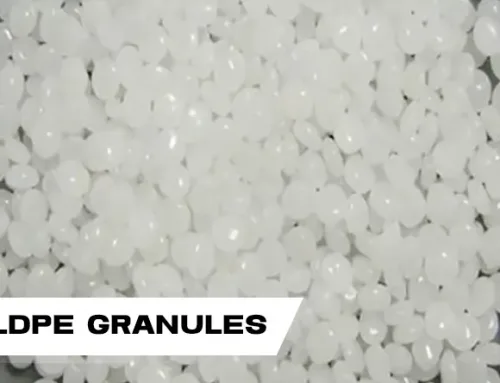
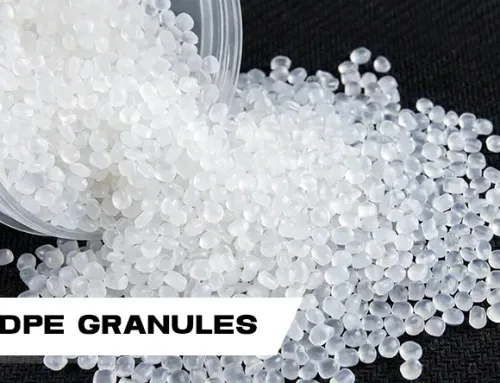
High density polyethylene (HDPE) granules are granules of plastic manufacturing high density polyethylene designed as a reliable raw material in plastic processing. HDPE granules uses are blow molding, film, pipeline, and injection processes. These HDPE plastic granules provide a high strength over density ratio, high chemical resistance, and consistent melting behavior. All the above factors make them perfect for B2B buyers who require consistent, industrial-scale delivery.
HDPE plastic granules or pellets should be used as opposed to powder or scrap when production is stable and quality control is tight by virgin HDPE granules manufacturers in Iran. The similarity in the particle size ensures even melting, consistent melt flow, and less chance of clogging in extruders and injection molding machines. Moreover, the granules are virtually dust-free, can be transported pneumatically, and can be automated in terms of dosing, which enhances housekeeping and the safety of the operators in any HDPE granules factory. Shobeir Shimi, as bulk HDPE plastic granules supplier, provides all neede materials. Contact us now as an HDPE granule supplier, to consult and receive a Technical Data Sheet (TDS) or check the current cost of HDPE granules that match your application.

Types of HDPE Granules
To buy HDPE granules, you should know that HDPE granules come in various types to strike a balance between the performance and cost of each application. HDPE granules manufacturing of raw materials includes virgin HDPE granules and recycled HDPE granules, which come in assorted colors and grades.
Virgin HDPE Granules (Prime Grade)
This is a product made of petrochemical plants, meaning that the virgin HDPE granules (also known as HDPE virgin granules or prime grade HDPE) are made directly by ethylene polymerization, and have no prior use or recycling history. These HDPE natural micronutrients have a small Molecular Weight Distribution (MWD), low odor and taste, and zero contamination, which is paramount wherever high organoleptic and mechanical functionality is needed.
These food contact grade virgin HDPE granules are normally applied in food contact bottles, pharmaceutical containers, and systems that are high-pressure pipes and fittings that are required to meet FDA and other such laws. Virgin grades are provided in natural, milky white pellets that can be colored by the use of masterbatch to provide the converter with the greatest flexibility in the final product design. Contact us now to order.
Reprocessed High-density polyethene (HDPE) Grains
The recycled HDPE granules (reprocessed HDPE) are manufactured using the HDPE waste streams collected and are suitable for the buyer in order to achieve the aim of reducing cost and enhancing sustainability. They are up to 20-30% cheaper than virgin HDPE granules, depending on grade, with a much lower carbon footprint, with circular economy goals.
There are two primary types of sourcing: PIR (Post Industrial Recycled), which is made of factory scrap and provides cleaner feedstock and more homogenous properties, and PCR (Post Consumer Recycled), made of used bottles, crates, and other consumer goods that facilitate green certifications. Recycled HDPE granules can be bought in a variety of colors:
- Black HDPE granules: HDPE black granules are usually filled with carbon black to be stable to UV, and it is good for outside pipes, irrigation lines, cable lines, and industrial products.
- Blue HDPE granules: mostly applied in drums, barrels, and pallets, where blue is considered to be the norm in the industry.
These recycled products are an effective alternative to purchasing HDPE granules that have a cheaper base but do not compromise performance.
HDPE Granules Grades & Applications
It is essential to match HDPE granules grades to the exact process of HDPE granules for sale (blow molding, film, pipe, injection) to be efficient and performance-based products. The most important parameters include: Melt Flow Index (MFI), density, and Environmental Stress Crack Resistance (ESCR), which should be compatible with your equipment and part design.
Blow Moulding Grade
HDPE in the blow grade is designed to be used in blow molding, commonly known as HDPE blow granules or HDPE blow molding granules. High melt strength prevents sagging of the parison, as well as high ESCR prevents cracking in stress containers or when in contact with chemicals.
Common HDPE granule applications in the blow molding process are detergent and shampoo containers, dairy and juice jugs, jerry cans, fuel tanks, and large chemical drums. In these applications, the control of MFI and good impact strength is guaranteed to provide reliable processing and drop resistance in the end product.
Pipe & Extrusion Grade
HDPE pipe grade is made up of granules that are used in the extrusion of pressure and non-pressure pipes and profiles. Pipe grades tend to be denser and tightly regulated molecular structure to give long-term hydrostatic strength and resistance to slow crack propagation.
PE80 and PE100 granules are usual terms used to describe the pressure pipes; PE100 has greater pressure capacity, and it is mostly utilized in gas and drinking water piping. They are commonly used with water supply pipes, gas distribution pipelines, corrugated drain piping, and power cable and telecom cables conduit casings.
Film Grade
The granules of HDPE film grade typically have high molecular weight and low Melt Flow Index to offer high toughness and high drawability. These high density polyethylene pellets are blown into very thin films without tearing up, so boosting yield per kilogram of resin.
Applications of HDPE film grade are mainly T-shirt shopping bags, garbage liners, agricultural mulch film, and food packaging film, which need to be stiff and puncture-resistant. Due to the film grade of MFI being significantly lower than that of pipe or injection grade, you should not confuse the grades when using them in applications that require different behavior of flow behavior.
Injection Moulding Grade
HDPE granules of high MFI are used in injection grade to fill complex molds rapidly and short cycle time. This HDPE is a grade that is good in impact and low in warpage and is therefore needed in dimensionally stable parts like crates and pallets.
Injection molding of typical HDPE granules is in the form of rigid crates, pallets, buckets, and pails, caps and closures, houseware, and some technical components. The right HDPE granules grades used on injection assure minimal short shots, fewer defects, and more productivity.
Technical Properties & Specifications
For HDPE granules buyers such as engineers and quality managers, the properties of HDPE granules define processing windows and end-use performance. Typical commercial ranges and uses of HDPE granules are summarized below (exact values depend on specific grade and supplier).
| Property | Range / Notes |
|---|---|
| Melt Flow Index (MFI) (190 °C/2.16 kg) | Approx. 0.3 – 1.0 g/10 min for pipe and film grades; up to 20 g/10 min for injection grades. |
| Density | 0.940 – 0.965 g/cm³ for HDPE plastic granules. |
| Tensile Strength at Yield | High tensile strength suitable for structural parts and pressure pipes (exact value grade dependent). |
| Filtration Mesh Size (recycled) | Commonly in the 80–150 mesh range to protect extruder screens and dies. |
| Ash Content | Typically below 0.1% for prime grades; a key purity indicator in recycled grades. |
| Moisture Content | Typically below 0.05% to avoid bubbles and surface defects during processing. |
HDPE plastic granules HS code for international trade is 3901.20, which includes polyethylene of specific gravity of 0.94 or above. The designation assists importers and HDPE granules clients in computing duties and handling the documentation of customs effectively.
HDPE granules meaning is in this respect is that (according to customs nomenclature) HDPE granules are pellets or granules (mainly in primary form) rather than finished articles.
The main benefits of high density polyethylene pellets are a high level of resistance to acids, alkalis, and most solvents, no hygroscopic characteristics (they do not absorb water), and a high level of impact resistance even at low temperatures. These characteristics of HDPE granules help it to be used in the packaging and piping of industrial goods and outdoor products of high demand.
Need help ordering? Contact us now.
Production Process and Quality Control
HDPE granules manufacturing process relies upon whether the material is a virgin or a recycled one; however, in both processes, a steady, controlled workflow is necessary. In the case of recycled HDPE, the usual procedures are sorting and washing, drying, extrusion in an extruder, volatiles removal during the degassing process, filtration, and strand or underwater cutting system in order to acquire a pelletized product.
Clean flakes are converted to uniform HDPE plastic pellets and granules of constant size and low dust through an HDPE granulator and a pelletizing line. A modern HDPE granules plant will test every batch in the laboratory to check MFI to determine flow characteristics, density to determine grade, and other values of ash, moisture, and color uniformity.
Proper manufacturing of HDPE granules of raw materials and recycling lines can accommodate capacities in excess of hundreds of metric tons per month to sustain a continuous supply of large injection molding, blow molding, and pipe extrusion plants. It is a scale of special concern where global OEMs and long term framework contracts are involved.
Pricing and Supply Information
The price of HDPE granules is also affected by various factors that the procurement managers should know. One of the major sources of HDPE granules is in the form of its cost, which is influenced by the trends in the market of crude oil and ethylene across all regions. The difference between virgin HDPE granules price and the price of recycled HDPE granules is normally clear; virgin grades are priced higher because of high purity and certifications, whereas the recycled grades are less costly.
Price per kg of HDPE granulates also depends on color, with the natural and white color being generally pricier, and mixed color or black, which are obtained by recycling, tend to be cheaper. Since the price of HDPE granules may vary on a weekly or monthly basis, the most effective way is to ask to be provided with an up-to-date price list and negotiate the prices of your own grade and quantity. Contact us now to get a free quote.
In the case of export business, HDPE granules for sale are normally sold at a Minimum Order Quantity (MOQ) i.e., 1 FCL (Full Container Load) according to grade and packing. Standard packages are 25 kg woven bags made of PP or PE lined bags, 1000 kg super sack bags (also called jumbo bags), usually palletized and shrink wrapped to ensure safe delivery abroad. Long term contracts are useful in stabilizing your cost base when you are planning to purchase HDPE granules regularly.
Why Choose Us as Your Supplier?
In Shobeir Shimi, as an HDPE granule supplier, the service is offered to HDPE granules purchasers in various regions with flexible commercial logistics, FOB, CIF, and EXW. This is because this global reach enables you to optimize freight and lead time on the basis of your location, be it sourcing of blow molding, film, injection, or pipe plants.
In collaboration with virgin HDPE granules manufacturers in Iran and other petrochemical centers, access to competitive feedstock and prime resin of high quality is available. This strategic sourcing benefits a good balance of price and quality, which is appealing to importers and big converters.
Technical assistance can be provided to suit the optimum kind of HDPE granules to your process, including advice on the MFI, density, and ESCR specifications. Before making large orders, you can test HDPE granule grades on your equipment and reduce the risk and expedite the qualification process by arranging samples. Contact us now to consult and place your order.
Ready to Order High Quality HDPE Granules?
Make sure you have a good supplier of HDPE granules that knows the technical needs and the financial limitations such as Shobeir Shimi. If you require HDPE film grade granules, HDPE blow granules, injection grade HDPE, or HDPE granule pipe, contact us now.
FAQs
- What is the specific difference in properties between virgin and recycled HDPE granules?
Virgin HDPE granules are usually high and consistent in tensile strength, color uniformity, and odor reduction as they are produced using pure petrochemical feedstock. Recycled HDPE granules may be more flexible in terms of mechanical properties and color, particularly PCR grades. - What is the current HDPE granules price per kg and how do I get a quote?
The price of HDPE granules per kg varies according to the demand of resin globally, the prices of the feedstock, the grade type, and color. In order to have a specific offer of the granules grades of HDPE, tell us your grade of requirement, usage, volume per month and destination port to the sales staff. - Can I use HDPE film grade granules for piping applications?
Pressure pipes made with HDPE film grade granules are not recommended since film grades are not similar to dedicated pipe grades in terms of MFI and molecular structure, which can be used to decrease long-term pressure resistance and crack resistance. Film grades are not designed to offer high hydrostatic strength and slow crack growth resistance, as pipe grade HDPE (PE80 or PE100) is. - What is HDPE granules used for in the packaging industry?
HDPE granules are principally utilized in the packaging of blow molded bottles and containers and shopping bags, industrial drums and caps and closures. - Do you provide Certificate of Analysis (COA) with every shipment?
In the case of virgin and recycled HDPE plastic granules, we normally provide a COA that reflects the main test results, including MFI, density, moisture, ash and in some cases tensile properties.


Leave A Comment