
In industrial applications where durability, safety, and long service life are essential, raw polyethylene resin alone is not sufficient. High-performance sectors such as pressure piping, power cable insulation, and chemical storage depend on precisely engineered HDPE compounds, materials produced through controlled melt blending of HDPE resin with specialized additives, stabilizers, colorants, and fillers.
Unlike virgin polyethylene made directly in polymer reactors, a polyethylene compound is an engineered material designed to deliver targeted properties such as high tensile strength, UV resistance, thermal stability, flexibility, and improved ESCR. Additives like carbon black, antioxidants, and HALS play a critical role in ensuring long-term performance under mechanical stress and harsh environmental conditions.
Polyethylene compounds can be based on HDPE, LDPE, or LLDPE, but HDPE is most widely used for structural and outdoor applications due to its high strength-to-density ratio and crystalline structure. In this article, we will explain all the details for buyers. Contact us at Shobeir Shimi to get a free quote and place your order.
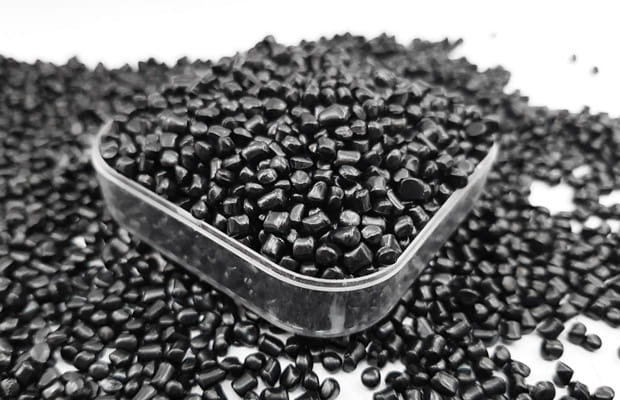
What Is an HDPE Compound?
HDPE compounds are advanced, ready-to-use materials engineered from High-Density Polyethylene (HDPE) resin blended with functional HDPE additives, fillers, and stabilizers to deliver superior strength, chemical resistance, and durability across demanding industries.
Defining HDPE Compounds and PE Compounds
Unlike raw polymer resins, which provide only basic performance, a customized PE compound (or polyethylene compound) is designed to meet specific mechanical, thermal, and environmental requirements. Through controlled melt blending, carbon black ensures UV stability, antioxidants and HALS protect against heat and oxidation, while mineral fillers such as talc or calcium carbonate improve stiffness and cost efficiency.
The result is a high-performing HDPE compound that maintains exceptional tensile strength, impact resistance, and long-term stability under harsh conditions, making it ideal for pressure pipes, wire and cable insulation, storage tanks, and structural components.
The Role of Polymer Compounding
The compounding industry exists to bridge the gap between raw resin production and end-product manufacturing. By adjusting additives and modifiers, they deliver dependable materials tailored to function under unique thermal, mechanical, or environmental stresses. Without compounding, manufacturers would need to mix additives on the production floor, resulting in inconsistent material quality and unpredictable output.
The Science of Formulation of Polyethylene Compound
Here is the science behind the formulation of HDPE compounds:
The Base Resin: The HDPE Matrix
The strength of any HDPE compound begins with its polymer backbone. HDPE features a linear molecular structure with minimal branching, giving it high tensile strength, stiffness, and low permeability. Its crystalline zones make it an ideal carrier matrix for various functional additives.
Essential HDPE Additives
The right HDPE additives start with the performance at a molecular scale:
- Carbon black is also a colorant and UV stabilizer that prevents the degradation of polymer chains by UV.
- Antioxidants: The antioxidants inhibit thermal oxidation of extrusion and long-term service.
- HALS stabilizers (Hindered Amine Light Stabilizers) increase the life expectancy of outdoor materials by counteracting the free radicals that form under the influence of sunlight.
- Flame retardants are found in cable jacketing compounds sold to reduce flammability and electrical tracking.
Fillers and Modifiers
Mineral fillers like calcium carbonate and talc enhance rigidity and low cost, whereas elastomeric modifiers enhance the impact resistance, particularly at low temperatures. Dimensional stability, surface finish, and mechanical strength directly depend on the filler ratio and dispersion quality, which are one of the main motivations behind the importance of the precision of compounding.
Key Performance Properties of a PE Compound
An important subject to know is the properties of the PE compound:
Impact Resistance and Mechanical Strength
An effective HDPE compound can resist high mechanical loads without cracking or deformation. The tensile strength can be increased with additive packages and filler ratios that will hold the elongation and provide impact toughness under heavy stress. All these characteristics allow HDPE to be used in heavy-duty applications, including gas pipelines and chemical storage tanks.
Environmental Stress Crack Resistance (ESCR)
ESCR is among the most crucial parameters in the assessment of PE compounds. It determines the resistance of a material to cracking under stress and chemical effects with time. This value helps the engineers to guarantee the long-term and safety of the pipelines and containers that carry the reactive or aggressive materials. High-level antioxidants and polymer modifiers are important in enhancing ESCR values.
Stability of Thermal and Chemical Inertness
The HDPE compounds are also stable over a processing and service temperature, with the normal temperature ranging between -50 °C and +80 °C. They are chemically inert to acids, bases, and solvents, making them useful in chemical handling and wastewater infrastructure as well as fuel storage.
Processing and Manufacturing Guidelines of Polyethylene Compound
Here is how polyethylene compound is processed:
The Melt Blending Process
Compounding is done in high-precision twin screw extruders, in which polymer and additives are melted and mixed thoroughly. Shear rates, controlled temperature areas, and residence times ensure equal dispersion of every additive in the HDPE matrix. The compound is then cooled, pelletized, and available to downstream procedures such as extrusion or molding.
Practices of extrusion and Molding
In the case of processors, the use of pre-compounded, polyethylene compound pellets can be significantly beneficial as opposed to additive blending in-house: consistent melt flow, better color uniformity, reduced defects, and easier production. Correct melt temperature and die setup also provide excellent surface properties and dimensional accuracy.
Problem Solving Production Problems
Such typical defects as surface streaking, poor dispersion, or melt fracture can be frequently linked to insufficient mixing or inappropriate ratios of additives. The collaboration with a reputable compound supplier can help to avoid such issues because certified formulations and predictable performance data can be used.
Applications and Markets in the Industry of HDPE Compounds
HDPE compounds include:
Pressure Pipes and Water Distribution
HDPE compounds of pipes are used in municipal and industrial infrastructures, commonly classified as PE80 or PE100 grades. The black HDPE compounds, having carbon black and stabilized with antioxidants, are designed to be used for 50 years of underground service, with the highest ESCR and hydrostatic strength.
Wire and Cable Jacketing
Compounded polyethylene is also important in the insulation of power cables and fiber-optic sheaths. Flame retardants, UV stabilizers, and anti-tracking HDPE additives are typically added to formulations to give the material lasting electrical operation and safety in the outdoors.
Blown Plastic Packaging and Storing Tanks
Polyethylene compounds used as the basis of industrial packaging have ESCR, stiffness, and chemical resistance, which are used in industrial packaging industries through chemical drums, fuel tanks, and IBC containers. Such blends resist corrosive liquids and mechanical forces and will not leak and deform even in extreme environmental conditions.
Standards and Certifications of HDPE Compounds
There are some standards of HDPE Compounds, including:
ASTM and ISO Testing
All HDPE compounds should be subject to stringent testing to ensure quality checks. Typical benchmarks include:
- ASTM D1238: Melt Flow rate testing consistency in processing behavior.
- ASTM D1505: Classification by measuring density.
- ISO 9080: Long-term hydrostatic strength prediction under pressure applications.
Regulatory Compliance
PE material that is safe and compliant with the requirements of potable water systems, the food contact FDA approvals, and the RoHS limitations on heavy metals in polymer additives. The suitability in these certifications is in industries that require reliability and responsibility to the environment.
The Identification of HDPE Compound
Pre-Mixed Compounds vs. Masterbatching
Buyers have two choices to make: to buy a completely formulated polyethylene compound in the form of pellets or additives to be mixed on-site using masterbatches. Ready-prepared compounds ensure uniformity, batch-to-batch, and reduce rejection, which is important in large volume production. The extra price per kilogram typically offsets in less waste, increased productivity, and less downstream maintenance.
Important Interrogatives with Your Supplier
Engineers should ensure that the suppliers of their compounds are checked on:
- Does it have additive dispersion analysis?
- What are the tolerances of melt flow and density changes?
- Does it have custom formulation and technical support?
- Is the compound application specific (e.g. NSF, ISO)?
By using reliable suppliers such as Shobeir Shimi, you make sure that your production line is produced to all the technical specifications with traceable data and performance records.
FAQ
- What is the difference between a polymer resin and a compound?
A resin is a compound that is an unmodified raw polymer formed through chemical polymerization. A compound, instead, is a ready-to-use material that has been developed with additives to give the material better properties and easier processing.
- What common HDPE additives are used for UV protection?
Carbon black and HALS stabilizers are mainly utilized to prevent the breakdown of the molecular structure in the face of sunlight and to block the UV rays.
- Can you mix an HDPE compound with LDPE or LLDPE?
Yes, mixing types of polyethylene changes mechanical strength, crystallinity and ESCR. This should be mixed with performance trade-offs being critically considered.
Conclusion
HDPE compounds enable industries to have high-quality, durable materials designed for high performance. In addition to being plastic, each polyethylene compound is a joint effort by molecular design, additive chemistry, and control of precision production to suit the needs of the most exacting industry requirements. Contact us now at Shobeir Shimi to get a free quote to place your order.